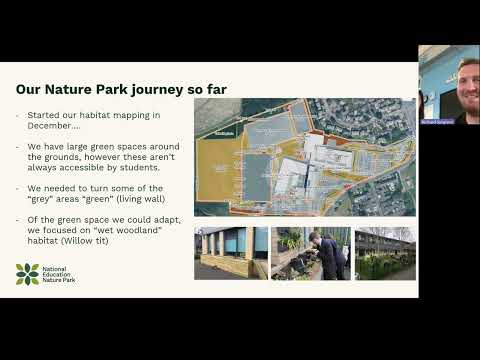
From grey to green: how Co-op Academy Manchester is bringing nature back to school
At Co-op Academy Manchester, a secondary school with over 1,600 pupils, students have worked to develop a living wall, planters, wildflower areas and wetland habitats to help transform their outdoor areas from grey spaces into greener ones with Senior Science Technician and STEM Lead Richard Simpson. Together, they are creating a more sustainable space with clear benefits for nature and the school community, including boosting biodiversity, creating shady spaces and cooling effects, and reducing their carbon footprint.
Wildflower areas – a low cost and low maintenance way to boost biodiversity, reduce carbon footprints and produce cooling effects
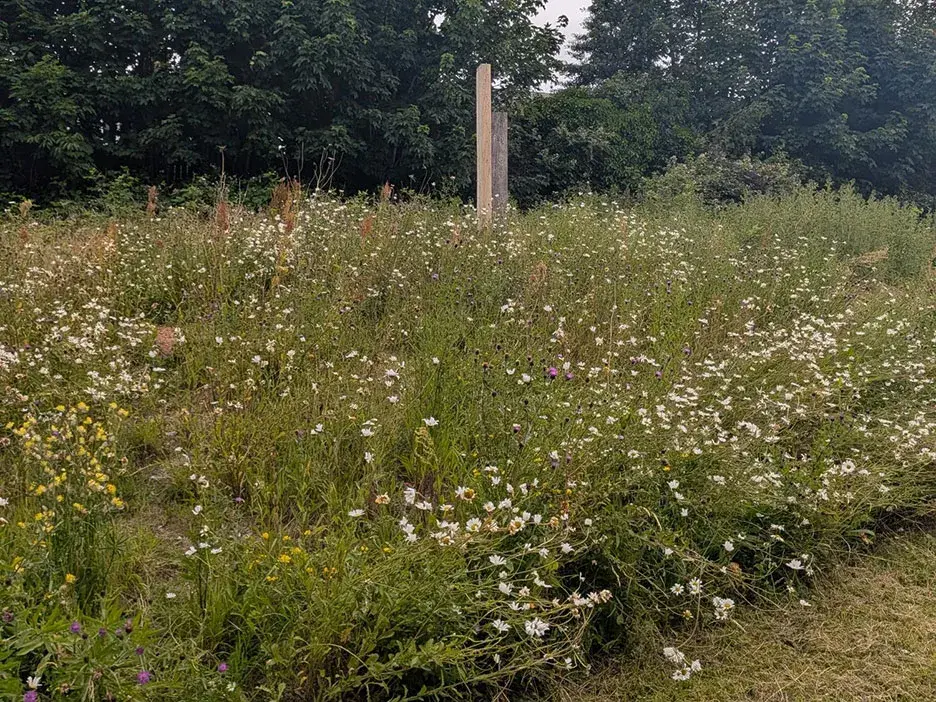
One of the most successful habitat improvements that Co-op have made is a thriving wildflower area on an unused patch of land by the car park, making use of recycled building materials.
After a new building was built at the school, Richard arranged for the rubble (MOT type 1) to be placed on the unused grass, and placed sand across the top which students helped to flatten out. These materials are very low in nutrients and so perfect for wildflowers, as it reduces the competition from grasses, nettles and brambles that often out-compete wildflowers in topsoil. A wildflower seed mix was then scattered across the space, and students built insect hotels to stand amongst the wildflowers. The area is blooming and frequented by pollinators including bees and cinnabar moths.
“Wildflower areas are an absolute no-brainer for schools to implement and really support with climate action plans. They’re low cost and low maintenance, while looking brilliant and so providing a more pleasant space, massively boost biodiversity and helping reduce your carbon footprint.”
Richard Simpson, Senior Science Technician and STEM Lead
Aside from the carbon footprint of the delivery of materials – which can also be reduced if like Co-op Academy, building materials recycled from work done on site are used – Co-op have found that there’s no maintenance like watering, strimming, mowing or herbicides needed. The direct sowing of seeds rather than planting potted plants also significantly reduces the carbon footprint of the planting involved.
“Something else I’m investigating is the potential of the building materials to provide an albedo effect,” says Richard. “The sand and MOT type 1 is cream or white in colour, so therefore has the potential to reflect radiation rather than absorbing it. In theory, this could help reduce the total urban heat island effect that happens when heat from the sun is absorbed heat in dark coloured surfaces like tarmac.”
Creating shade with planters in reused IBCs
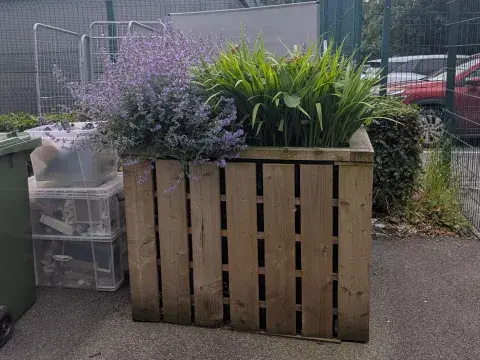
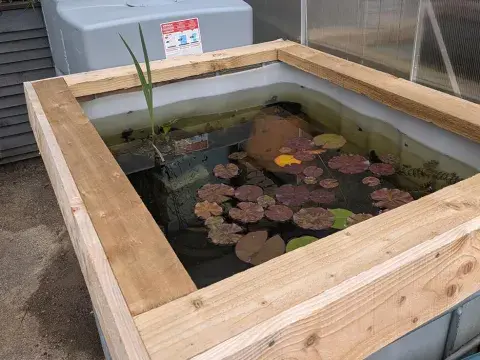
Next to the living wall, Co-op have added four planters made from IBCs (intermediate bulk containers) which Richard bought from a construction site for about £100. One has been turned into a pond, one contains a variety of pollinator-friendly plants, and there are plans to grow a willow in one to provide additional shading to the area. A clear benefit of IBCs is that even when planted, they can be moved using a pallet truck to the location where the shade is most needed. “All IBCs are designed in the same way to be used like a pallet, so provide a truly universal solution for creating large planters that provide shade”.
A living wall to reduce classroom temperature
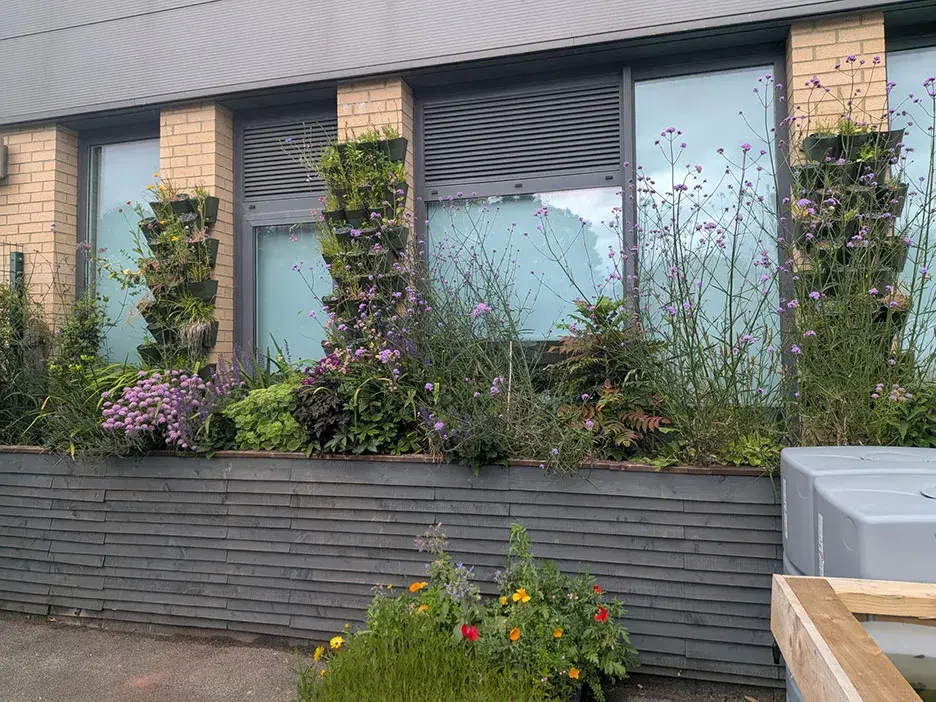
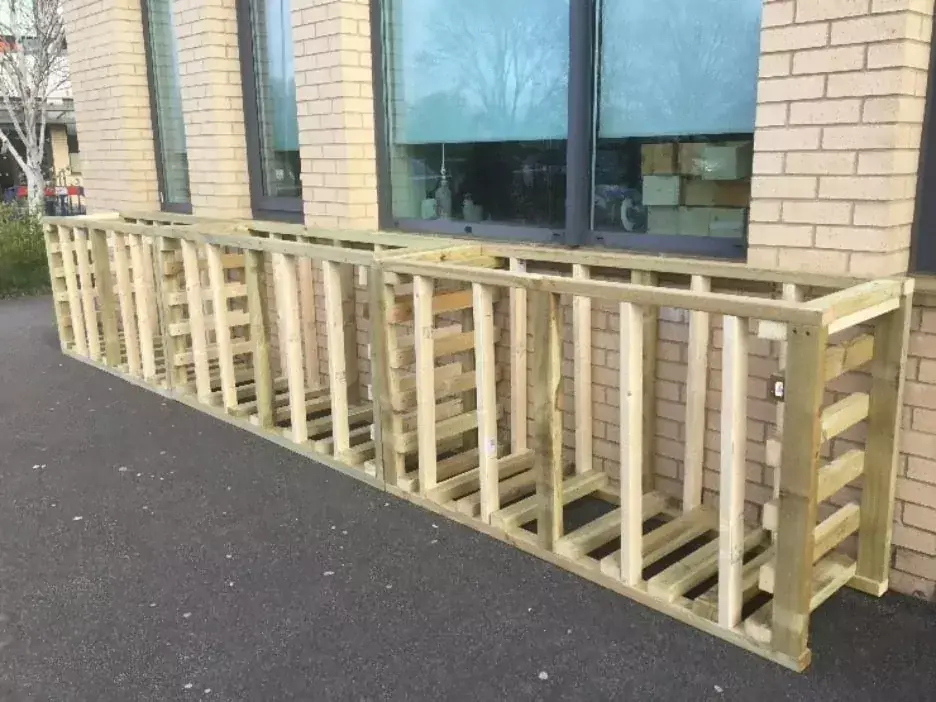
After mapping their site with Richard, students noticed that there was a completely grey, concreted area of their school grounds outside a technology classroom that gets very hot in the summer. Seeing the potential of this space, students decided to use the Nature Park grant they were eligible for to install a living wall with the aim of shading and cooling the technology classroom to benefit both nature and the school community.
The wall is south-facing with no shelter, which influenced the decision to plant Mediterranean sun-loving plants. Students tested their budgeting skills in Business Studies lessons to select and buy plants, and planted:
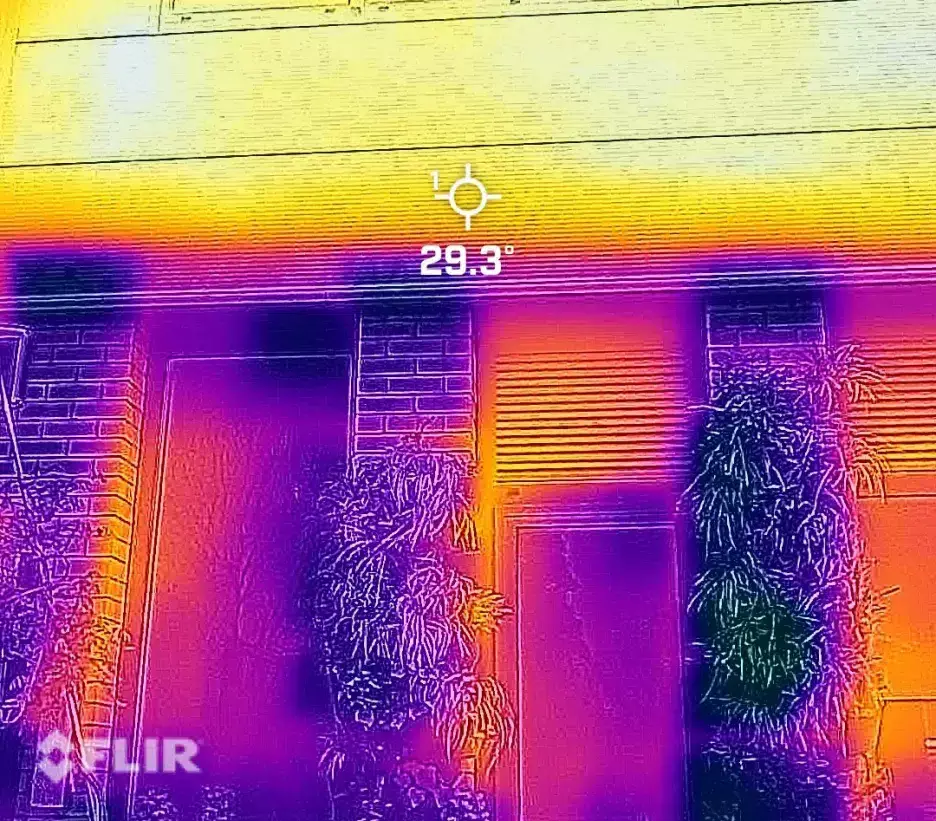
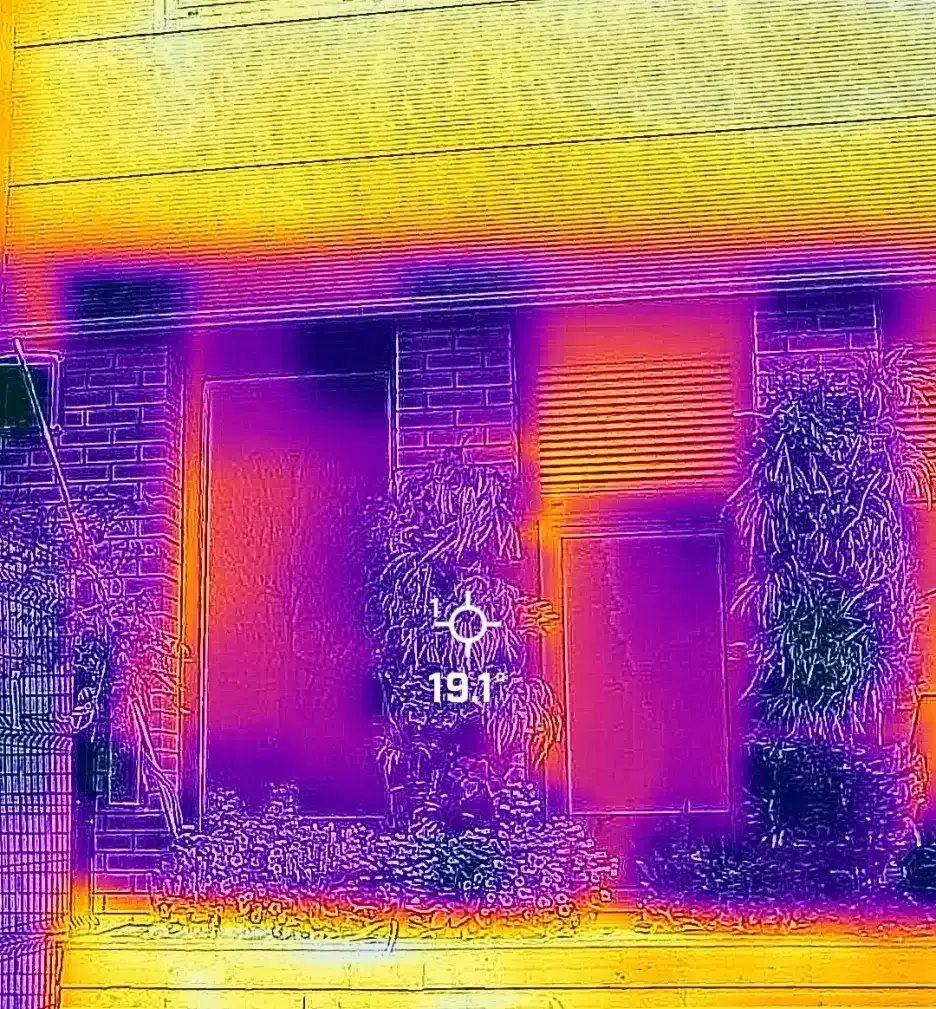
Co-op Academy have used FLIR ONE thermal imaging cameras to demonstrate how effective planting and greenery can be as a strategy for mitigating the overheating of south-facing rooms and buildings. The camera shows that there can be over a 10°C difference between the surface temperature of the cladding on the building compared to the planting in the vertical system, and they’ve been using these images in Physics lessons.
The living wall has not been plain sailing however – some of the grasses did not survive the first hot summer and were replaced with lavender, mint and chives. A solar-powered irrigation system now forms part of the living wall to ensure it remains watered throughout the summer holidays and aims to reduce plant losses.
“I’m glad we’ve tried the living wall, it continues to be a great learning experience for both the students and staff and it looks brilliant in the space. However, set up costs were high and it requires a lot of maintenance, so it’s not necessarily the first thing I’d recommend for others to try”.Richard Simpson, Senior Science Technician and STEM Lead
Building wildlife corridors with wetland habitats
Despite being in an urban environment in north Manchester, Co-op is surrounded by four sites of biological importance, putting them in a prime position to act as a ‘wildlife corridor’ for nature to move between these sites. In the sidelines next to the playground, they’ve placed log piles and created wet woodland pond areas (allowed to fill naturally with rain and leaf letter) to create wetland habitat and provide a valuable stepping stone for species in the area such as amphibians.
What difference have the improvements for nature made so far, and what’s next?
The greener areas are helping to transform staff and student experiences of the school grounds - staff members have been commenting on how nice it is to see the living wall first thing when they arrive at school in the morning, students have greener and more pleasant spaces to learn and recreate in and wildlife is thriving around the site. They’ve been marking the changes they’ve made on the Nature Park Map, to see the difference they are making alongside everyone else across the country, and are looking forward to continuing to develop their planters, wildflower areas and wetland habitats.
Inspired to start your Nature Park journey? Register to join and help boost nature on your learning site.
Hear about Co-op Academy's experiences of the Nature Park in their school