
Meet the Nature Park regional team: South East
© The Trustees of The Natural History Museum, London
Welcome to our series where we meet the regional teams working on the National Education Nature Park!
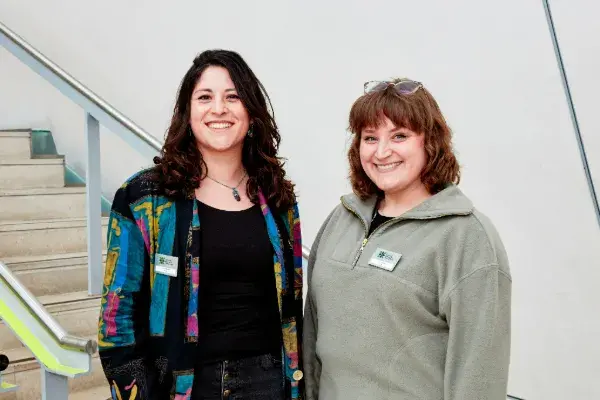
Our regional officers work in locations across England, helping spread the word about the Nature Park and supporting schools in their region on their Nature Park journey. In this blog we meet Anna Mynett and Ceri Jones, the Senior Programme Officer and Programme Officer for the South East.
Anna Mynett, Senior Programme Officer for the South East
What excites you about the Nature Park programme?
" I love how it brings together nature connection and action. So many programmes offer one or the other, but I feel they’re so intertwined. We only protect the things we care about, after all. This programme is really exciting because it helps children develop that connection, something many of us have lost in today’s world. It gets young people outside, connecting with nature, learning through it, and feeling part of it, and then gives them agency to do something meaningful to protect it, in a space they can feel is theirs. That’s powerful. At a time when so many young people feel anxious about the future, it gives them hope, ownership and purpose. It says: you can make a difference. And that message, that sense of agency and belief, is so important. "
What are you looking forward to most with the Nature Park?
" I’m really excited to see what young people do with the programme, the ideas they come up with are often so creative and thoughtful, and I think we’ll see a wide variety of interventions. Having been a garden designer, I’m especially looking forward to seeing how they imagine and shape their spaces.
One of the things that brings me the most joy is watching children discover something new – spotting an insect they’ve never seen before or learning something surprising about an animal they already love. That sense of curiosity and wonder is brilliant to witness. "
What is your favourite UK wildlife and why?
" That’s a tough one… At the moment I would say a Beaver. I recently visited a rewilding site and saw so much evidence of their destruction and creation; trees felled, channels reshaped, water slowed and redirected. They are exceptional landscape architects and builders. As one of the UK’s keystone species, they act as ecosystem engineers, creating wetlands that provide habitat for countless other species and help regulate water across the landscape. It was amazing to see their work in real life.
During the day I stood quietly next to their beaver lodge and could hear them snoring inside, which made me chuckle. Later that evening, we sat in silence by the lake and waited. A beaver emerged and glided majestically across the lake in the dusk evening light. I love that contrast – majestic yet playful, cheeky but capable of destruction and creation that can shape a whole landscape. "
Ceri Jones, Programme Officer for the South East
What excites you about the Nature Park programme?
" What excites me most about the nature park is how it connects children and young people to nature, especially in very grey areas. Watching young people discover the magic of our natural world is incredible. That huge oak tree? That used to be a tiny acorn, and now look at it! Home to hundreds of animals and organisms. It’s very empowering when pupils find their love of nature and in turn their want to protect and improve it. "
What are you looking forward to most with the Nature Park?
" I’m most looking forward to seeing what changes students decide to make to their settings as well as letting their creativity run wild and taking ownership of their projects. The nature park puts the students at the centre of that decision making process, and it’s exciting to see how much of a difference even the smallest change can make to biodiversity. "
What is your favourite UK wildlife and why?
" My favourite UK wildlife has to be puffins! They are small but so charismatic. Puffins will spend the majority of the winter months at sea, over a wide range of areas; some hang about around the UK and Ireland, while others will travel as far as Canada! Puffins are burrow-nesters and although they do dig their own burrows, if there happens to be a rabbit burrow going free, they will quickly move in. A baby puffin is called a ‘puffling’! "
Meet the other Nature Park regional teams
Contact your regional team
To get in contact with your regional team please email us at [email protected]