Meet the team: Community Science
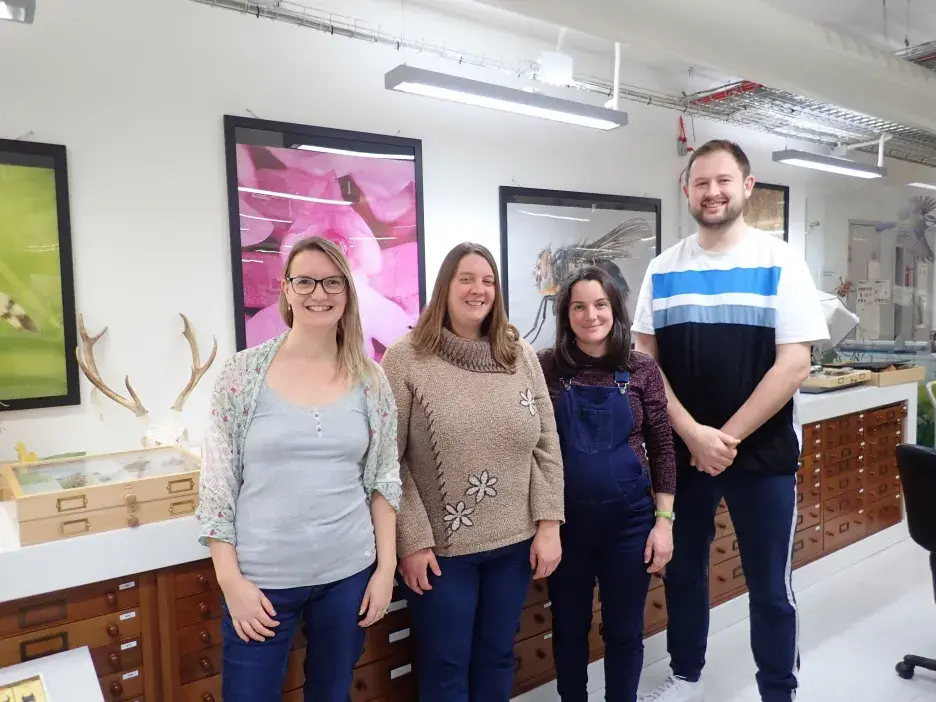
Scientists from the Community Science team at the Natural History Museum are excited to introduce themselves as part of the National Education Nature Park. Their work focuses on connecting young people with the natural world by turning everyday observations into valuable scientific research. In this blog, they talk about what their work involves and their goals for the Nature Park.
Read our blog Community science: five success stories to fuel your Nature Park journey to hear examples about how powerful community science in schools can be. Even the smallest of community science discoveries can have a big impact: A vital find – the power of community science.


Victoria Burton, Postdoctoral Researcher
Hi! I’m a biodiversity scientist and my role in the Nature Park is to plan our scientific research. This involves working with the community science team and other researchers to decide the questions we want to answer, ensuring our methods are designed effectively, and analysing the data collected by children and young people to uncover the answers!
Our main goal is to understand the nature present on school sites and how the positive changes schools are making help to enhance it. I’m excited to be working with a big team of community scientists across England to explore this together! But there are many other exciting discoveries we can make too. I’m keen to learn what questions young people have about their own sites and to support them in carrying out their own investigations while bringing real science into their learning.

Thomas Lawrence, Community Science Officer
Hi, I’m Tom, a Community Science officer working on the Nature Park programme. My role is to help develop and deliver the community science aspect of Nature Park. I try to make community science as easy and accessible to teachers and learners as possible. This includes regular webinars, running teacher training sessions on Nature Park and going directly into settings to work with learners. The data learners collect is vital scientific data that helps them learn about the wonderful things on their site and also document the impact they are making.
My favourite thing about UK wildlife is the great variety of it. You can travel to Scotland to see the great majestic golden eagles or look among the leaves in your local green space to find a wide variety of different insects. This means that there is something for everyone regardless of their favourite aspect of nature.

Alexa Varah, Postdoctoral Researcher
Hello! I’m an ecologist who specialises in human impact on our environment and how to mitigate this, particularly for biodiversity. I’m carrying out a meta-analysis for the Nature Park project. A meta-analysis is where you take the findings from published studies and re-analyse them all altogether — it’s the ‘gold-standard’ way of assessing the available evidence. The results will inform us of the potential nature gains that schools might see when they make a change to their site.
I'm really excited about the habitat mapping that schools are doing. If we can see what’s on their site to start with, and then later what changes they have made, we should be able to predict what might happen to the biodiversity on their site. We can potentially then compare our predictions with the biodiversity they actually see, which we can use to improve our models. It would be amazing to see community science helping inform academic research like this!

Giuliana Sinclair, Community Science Officer
Hello, I’m Giuliana and I think of my role as bit like that of a pollinator. I take the incredible community science knowledge from our team and share it with colleagues and facilitators across the programme to get everyone confident talking about and delivering Nature Park’s powerful community science activities. I’m really looking forward to going on a regional tour to meet our colleagues across England and understand how I can support them best.
My favourite UK wildlife depends on the day! I love moths as a group, because they are incredibly gentle, fuzzy and fascinating animals (and more efficient pollinators at night than day-flying insects!). I’m very excited for everyone to realise how impactful community science really is. It all starts from drawing a habitat map, taking pictures with iNaturalist or doing a pollinator count.
See here how your maps are contributing to global biodiversity research.

Jade Gunnell, Senior Community Science Officer
I’m Jade and I am the Senior Community Science Officer on the Nature Park project. My job is to lead on turning the scientific research of the Nature Park programme, into something that the children and young people on the programme can carry out themselves. In our team we create scientific methods and activity worksheets that mean young people can be the real scientists, collecting and interpreting data about the wildlife on their site. I also work across other teams in the Nature Park to make sure that this Community Science links in and works with the curriculum activities and nature connection activities of the programme.
One of the things I’m most excited about on the programme is the habitat mapping. It’s an activity that isn’t easy for professional scientists to do, but we have teams of young people and their educators, across England, doing the most incredible job of producing sensational, high-quality habitat maps. Go team Nature Park!

Lucy Robinson, Community Science Manager
I oversee all the amazing community science research collaborations between the Natural History Museum and the many incredible people across the country who work with us to study nature – that includes you! I’m also deputy head of the Museum’s Centre for UK Nature, so I get to work across a wide range of activities that support people to develop the skills, knowledge, confidence and passion to take action for nature. In the past I’ve studied how participating in community science projects like the Nature Park can enhance young people’s science learning and sense of agency to take action for nature and this is a part of the programme that really excites me – young people achieving real world change.
I’ve been involved in the Nature Park from the very beginning, developing the concept from scratch, so it gives me a real buzz to see so many people signing up and taking part. You may not have realised until now, but you are collaborating with some of the top biodiversity researchers on the planet!