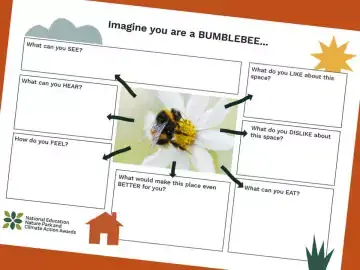
Image
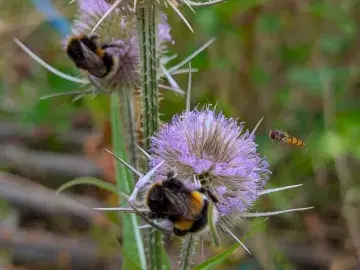
Follow the lifecycle of a bumblebee colony throughout a year using this presentation. Bumblebees are an example of an insect lifecycle involving complete metamorphosis. This resource can help learners make more informed decisions about supporting pollinators after doing a Nature Park Pollinator Count.
Key learning points include understanding the lifecycle of bumblebees and understanding what bumblebees do in different seasons.
Images and definitions for some of the key words used in the later slides.
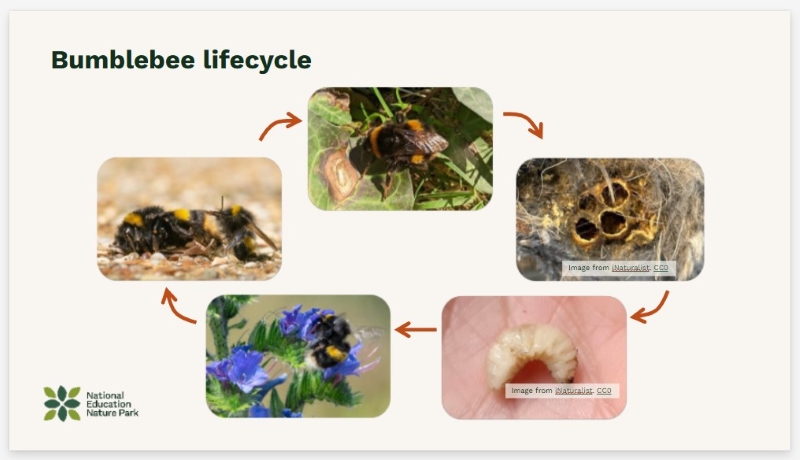
Step-by-step of the lifecycle of bumblebees and a bumblebee colony over the course of a year.
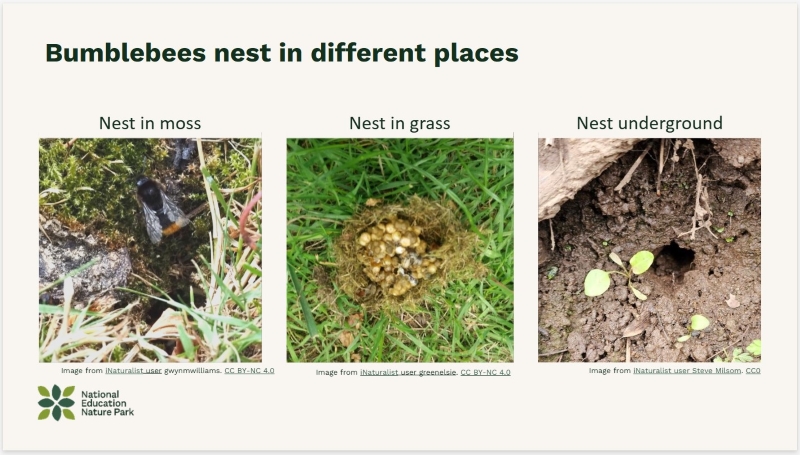
A few variations in the lifecycle of bumblebees.
Some species of bumblebee wake from hibernation earlier than others. Their colonies grow to their maximum size earlier, but they also usually die out earlier in the year as well. If continuing on to do a pollinator count, learners could be encouraged to think about how time of year might affect their survey results.
Different bumblebee species also have different preferences for where they nest. Learners could be encouraged to discuss how this knowledge could inform actions to help bumblebees.
Responses to these questions should include discussions of how the needs of bumblebee queens and their colonies change over the course of a year. Learners should recognise that flowers provide food for bumblebees, but queens also need places to nest and start a colony or to hibernate over winter.