A vital find – the power of community science
Giuliana is a Community Science Officer working on the Nature Park programme. In this blog, she talks about a recent experience she had with iNaturalist – a key part of your Nature Park toolkit – showing the power of community science and how it can help you discover the unexpected!
One day in late summer, while on a bus, I found a little insect crawling around my backpack.
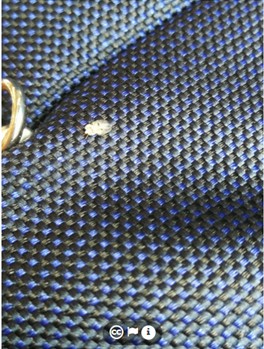
Before gently getting it out of the window, I decided to take a quick picture and upload it to iNaturalist. I was intrigued about what it could be, as it was very tiny and had delicate lacy wings I’d not seen before. I’m no entomologist so I wondered if the community on iNaturalist could help me identify it.
The hasty picture I took was blurry and of terrible quality! Click here to view the observation.
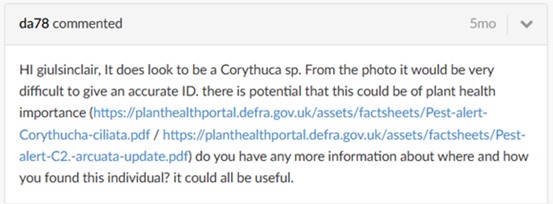
Yet, a few days later, a fellow iNaturalist user, Duncan Allen, commented that the bug belonged to the genus (i.e. group of insects) Corythucha, which are all lace bugs, and therefore could be of plant health importance.
A few weeks later, another iNaturalist user, Alex Radac from Romania, was able to confirm the species as the plane lace bug, Corythucha ciliata, because you could see the two dark spots on its wings.

As it turns out, this blurry picture was the first UK record of the plane lace bug in 18 years!


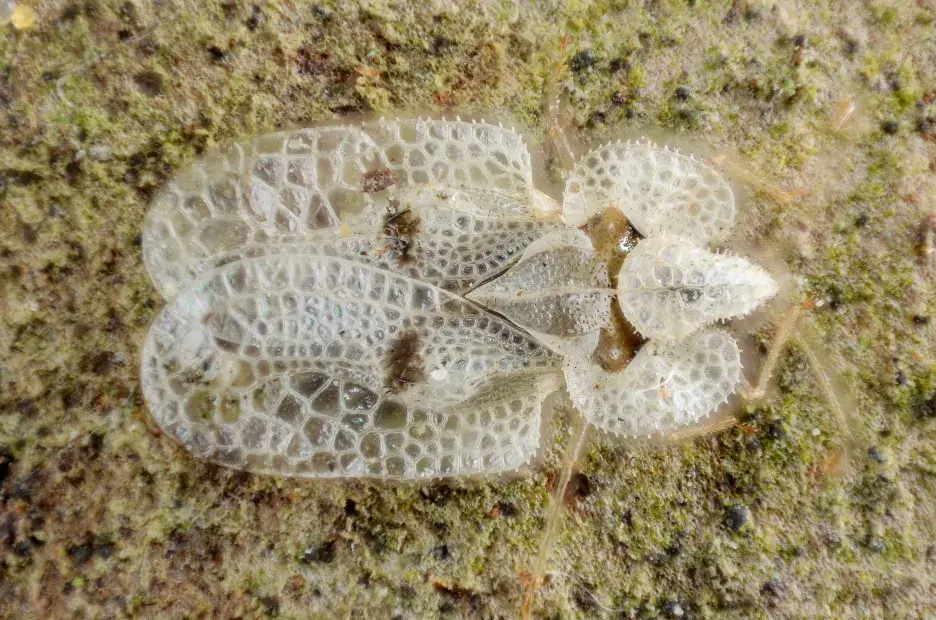
The plane lace bug
The plane lace bug feeds by sucking the sap of the leaves and causes them to turn a bronze colour and fall earlier than they would. It weakens the plane tree and makes it vulnerable to other infections. Plane trees are one of the few that can survive the environmental stresses of cities, so this added pest, if widespread, can be a real risk to their health.
Photograph © Peter Brodra
Since my sighting, experts have officially confirmed its presence in central London. Now tree surveillance ObservaTree volunteers from the Woodland Trust have been mobilised, and the Forestry Commission is monitoring the lace bug’s spread by running surveys all over the country.
Unbelievable as it is, this random sighting was the very first alert to the pest and kicked off a nationwide monitoring effort in the process!
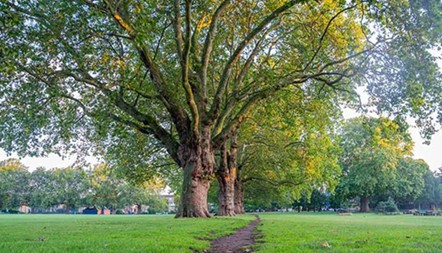
How many shrubs, insects and wildlife do we walk past every day and not think twice about? How many other important sightings lay undiscovered?
Here lies the power of community science. Use your eyes and ears on the ground and submit your records onto iNaturalist! You never know what you might discover, or how consequential your sighting might be.
Watch our video all about using iNaturalist as part of the Nature Park programme and check out the activity page for more details.