
Nature Park science update: December 2025
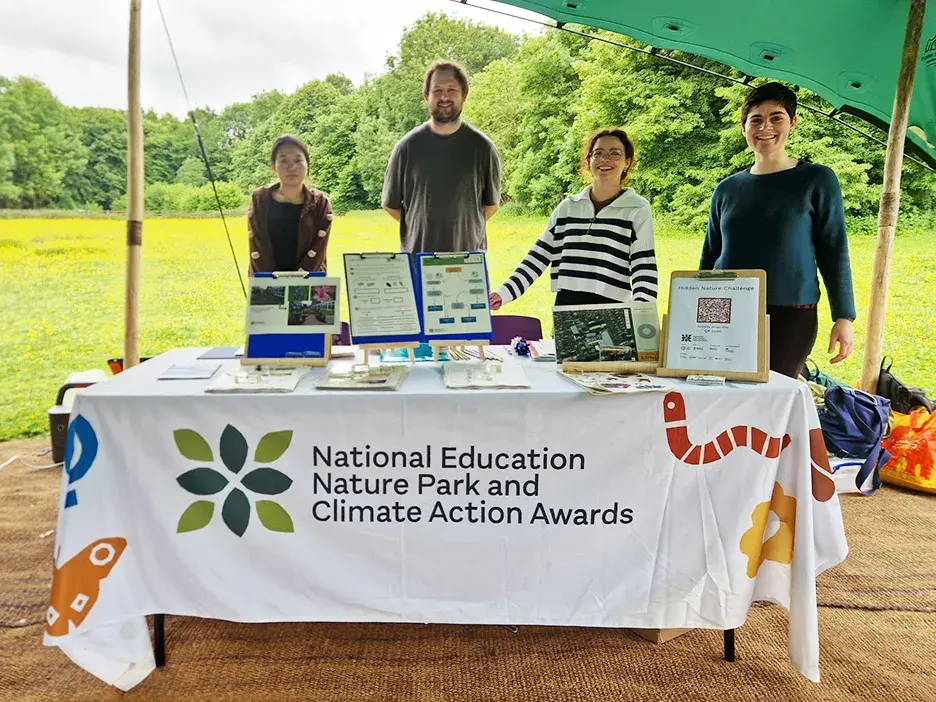
In this blog, Victoria from the Nature Park Community Science team shares an end-of-term update on what they've been doing with all of the amazing data you've been collecting!
Hi everyone!
I’m Victoria, a Researcher at the Natural History Museum and part of the Nature Park Community Science team studying all the amazing data that young people across the country are collecting. The team can hardly believe we've been working with you for over two years now, and that there are more than 8,300 nurseries, schools and colleges registered for the programme – that's over a third of primary and secondary schools in England!
This term’s science spotlight
Through habitat mapping, you’ve now mapped nearly 16 kilometres squared of habitats and 12,820 kilometres of habitat lines including 93 kilometres of hedges – roughly the distance from London to Bristol! You've also mapped an incredible 9,156 microhabitats, including 990 bird boxes and 210 hedgehog houses!
I'm now carrying out the first analysis of these data and will present early findings at the British Ecological Society Conference in December. Another Museum Researcher, Alexa will also be at the Conference, sharing her work that collates evidence from other nature recovery projects that allow us to predict what biodiversity gains we can expect in the Nature Park through all the amazing changes you are making.

How we’ve been using your data this term
Last summer, we had some university students join the team to conduct some research to help us to improve the programme.
- University College London student Junyan Gao visited Nature Park schools to learn how they were getting on with the Pollinator Count. She discovered that honeybees and flies were the easiest pollinators to identify, while solitary bees and wasps were trickier. This is useful to know because it helps us interpret your data more accurately. The good news is that we've introduced a simplified version of the Pollinator Count which is leading to much more accurate identification!'
- Imperial College student Yi Wang explored how planting wildflowers affects pollinators in different settings. Her research showed that wildflower planting significantly boosts bee numbers and species diversity, with even bigger gains in urban areas compared to rural ones. Just like Masters student Ruby Chesney-Spedding found last year, Yi discovered that large plantings have a similar impact to small ones, which is fantastic news for the Nature Park programme! No matter what the size of your outdoor space, you can have a real impact – even if you only have space for a few small planters, you can still make a real difference for pollinators.
- Yuda Wan, another Imperial College student, looked at how wildflower planting influences pollinators, pests, and natural predators of pollinators such as ladybirds and wasps. His findings were exciting: wildflowers benefit all three groups, with the strongest positive effects for pollinators and their natural predators.
Coming up next term
We’ve been reviewing the Record wildlife on your site resources to get them ready for next year to support you to identify what's living on your site. Following on from the Pollinator Count, next biodiversity survey will focus on grassland plants and is set to launch in the spring term. We’ve been busy testing the survey with local schools and have already received some fantastic feedback.
You don’t have to wait until then though, as recording wildlife with the iNaturalist app or website can be done all year round. Why not sign up now and get some practice in before the City Nature Challenge in the spring?
Best wishes for the New Year from the Nature Park Community Science team.