Habitats: biotic and abiotic factors

This resource offers profiles of some of the diverse range of habitats within the UK. Learners can use the provided specialist animal communities to explore the interactions between living and non-living parts of ecosystems. These specialist communities can also be combined with public biodiversity distribution data to begin to develop a profile of their local ecosystem.

Key learning points include recognising the characteristics of ecosystems in the UK, and understanding some of the relationships between biotic and abiotic factors which define these ecosystems.

Lesson plans
KS3
KS4
Biology
Geography

Preparation

What you need
  • Habitats: Biotic and abiotic factors presentation
  • habitat profiles handouts
  • animal community handouts
  • devices with internet access (if researching biotic communities online)
  • paper and pencils for notetaking or annotating
Location

Indoors

Scaffolding resource

Image
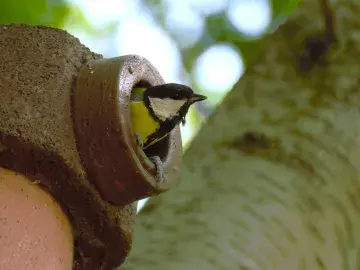
Great tit in a brick birdhouse with a tree in the background.

Introduction to habitats

Begin activity

Step by step

  1. Have learners look at the landscape image and see how many different habitats they can spot. Alternatively, print out this image or disseminate it digitally so groups or individuals can annotate the map.
  2. Ask the class to reflect on how they differentiate different habitats. Sort these into two columns (biotic and abiotic). Optionally, keep this sorting system secret and ask the class if they can see what the things in each column have in common.
  3. Work through the presentation. Learners could work on their own or in small groups to discuss or write down their responses to the questions and prompts.
  4. Explain that there is a diverse range of ecosystems in the UK. These are defined by having different biotic and abiotic characteristics.

Below are two ideas for where you might take the lesson next. You could also do them sequentially, taking the activity from theory into the real world and your local context.

Researching and matching
  1. Disseminate Habitat profiles and Animal communities sheets.
  2. Have learners research the animals in each community and try to match them with their habitat.
  3. Review the answers (see animal communities slide notes, 35-40).
  4. Revisit the landscape image.
  • Can learners describe habitats in different parts of the image in more detail?
  • Can learners predict anything about the ecosystems which might be present in the image

Note: if students are doing their own research, you can print the Animal Communities slides (35-40) which provide only pictures and names. For a quicker activity, use the animal community profile sheets, which contain the necessary information.

Apply concepts to the local area 
  1. Disseminate the animal communities together with their associated habitat.
  2. Have learners research the plants and animals in each ecosystem on iNaturalist using maps of observations.
  3. Use these maps to identify habitats which might be in the local area.
  • Does this information tell the class anything about the biotic or abiotic factors which might be present around the school?
  • Have the class reflect on what types of enhancements might be suitable for the conditions at their school. Are there any habitats which would not suit the site?

Note that this second activity depends on how much biological recording happens in your area. If there are few observations in your area on iNaturalist, learners can also try the National Biodiversity Network Atlas.

Plenary

Revisit the landscape image from the beginning of the lesson. Ask learners:

  • Can you describe the habitats in different parts of the image using the concepts of biotic and abiotic factors?
  • Can you predict anything about the ecosystems which might be present in the image?
Reflection

How can understanding the biotic and abiotic factors in the surrounding area help with deciding what enhancements we would like to make to our site?