
Image recognition: Part 2 – Making an algorithm

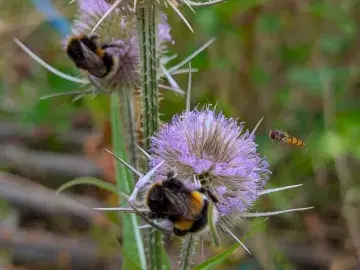
This resource presents a more computational way of developing a branching key. Learners use the table of variables and values from Part 1 to create an algorithm for identifying bumblebees. 
 

Key learning points include identifying specific characteristics that are useful for classifying living things. Skills and knowledge developed in this resource also support learners to contribute to the Nature Park Pollinator Count.

Lesson plans
KS2
Computing
Science

Preparation

What you need
  • filled in charts or spreadsheets of bumblebee variables
  • bumblebee sorting cards or photos of bumblebees
Location

Indoors

Step by step

Learning outcomes (Slide 2)
  • know that an algorithm is a set of instructions.
  • know that information in computers is stored in variables.
  • identify variables that are useful for identification.
Key words (Slides 3-5)
  • Algorithm – a set of instructions for solving a problem.
  • Key – a tool for identification by looking for certain characteristics. 
Turning variables and values into an algorithm (Slides 6-15)

This resource uses a simplified example dataset based on ladybirds as an example of the process for turning the bumblebee variables into a key. You could also follow this process using ladybirds and the ladybird cards in All about ladybirds.
  1. Identify the range of values in each variable.
  2. For each species, draw connections between the values for each variable.
  3. Identify values which are associated with one or only a few species.
  4. Turn these options into the questions for the key.

Reflection  (Slide 16) 

  • Sometimes people see colours differently. What problems might that cause with our keys?
  • Do computers have the same difficulties with colour?

Challenge questions (Slide 17)

  • What are some reasons why we are asked to group together values that are numbers into ranges?
  • What are some reasons why we are asked to turn continuous variables into discrete variables?
  • If we allowed more than one colour in each of our bumblebee variables, what extra challenges might that cause?