Image

This outdoor Physics lesson provides hands-on experiences, making future Physics topics more relevant and meaningful for learners.
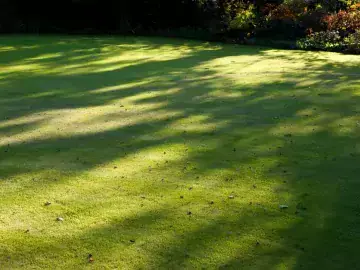
Learners explore their school grounds on a sunny day, predict the hottest and coolest spots and collect surface temperature data from various locations. Finally, they discuss their data, compare it to their predictions and perhaps reflect on the Physics principles behind surface temperature variations.
*Infrared thermometers often have a laser to indicate the measurement point. Ensure any school laser is class 2. Advice from CLEAPSS (www.cleapss.org.uk) is that teachers should only use reputable high street or school suppliers to be confident that lasers are class 2. Avoid clinical models, as their temperature range is too narrow for outdoor use.
indoors or outdoors
Starter (indoors or outdoors): Predictions
1. Explain that in this lesson learners will investigate temperatures across their school grounds and discuss how temperature change affects people, wildlife and habitats.
2. Ask learners to predict which areas of the school grounds will be hottest and coolest. Use photographs – of the school grounds - to prompt discussion. Encourage learners to explain their choices by considering factors like surface material and colour.
Main activities (outdoors): Explore temperatures around the school grounds
3. Show learners two identical bottles filled with water at the same temperature. Add black dye to one. Emphasize that the only difference is the dye. Place both bottles in direct sunlight and ask learners to predict what might happen after about five minutes. If learners need a prompt, mention temperature difference.
4. After about five minutes, have learners measure the temperature of the bottles and touch each bottle. Discuss their predictions. For an explanation of why the black bottle is warmer, see the supporting guidance.
5. Learners measure surface temperatures around the school grounds using an infrared camera, infrared thermometer, or by noting physical sensations—while explaining that humans aren't accurate thermometers, making such results less reliable.
6. Encourage learners to explore areas with and without trees, and different surfaces like grass, asphalt, artificial turf, and hard surfaces of various colours. Completing a habitat map can help identify these. If available, compare a green wall with a nearby masonry wall in similar sunlight. Near parked cars, observe the heat shimmer above the roofs at eye level.
7. Ask learners questions as they explore, to encourage observation and discussion. See supporting guidance for suggestions. If possible, have learners photograph locations and annotate them with temperatures for use in future lessons.
8. Discuss learners’ observations during the exploration or back in the classroom. Use the checklist in the supporting guidance to cover some key points.
9. The activity can be done indoors using your school ground’s temperature data or photos. Use the same discussion questions from step 7. Example images – including explanations of the relevant physics - are in the supporting guidance and PowerPoint.
Plenary: Applying this knowledge to everyday life
10. Ask learners why this knowledge matters and how it applies to everyday life. Discuss their ideas. Key points to help with this discussion are in the supporting guidance.
KS3
Experimental skills and investigations
Analysis and evaluation
KS4
Experimental skills and strategies
Analysis and evaluation
KS3
Energy changes and transfers
Energy in matter
Light waves
Physical changes