Image

A risk-benefit approach helps EYFS practitioners balance safety with challenge and discovery, ensuring that children can learn and grow through real-world experiences.
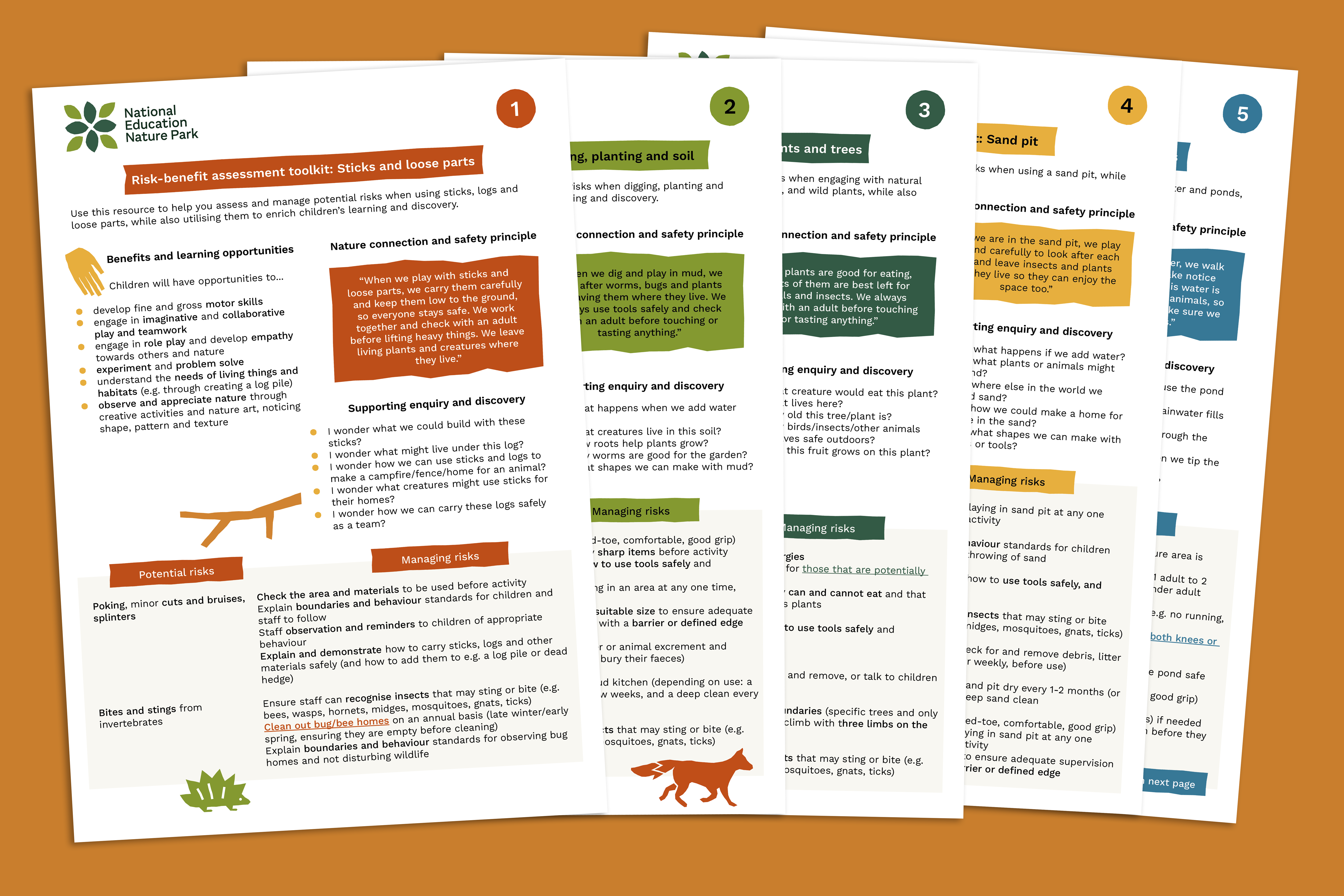
This guide outlines what a risk-benefit approach is and how to implement it in your setting. We have also included a downloadable toolkit for common outdoor features and activities, outlining benefits and suggested learning opportunities as well as methods for managing risk – supporting you to create environments that are both safe and stimulating for learners.
The Nature Park programme aims to support children as well as adults to feel confident and safe in their outdoor environment. To help you make decisions for your setting and learners that consider a balance of risk and benefit, we have produced a downloadable toolkit focusing on some common features and activities you may come across within your setting while taking part in the programme. We recognise that you'll already have your own risk assessment resources in place and encourage you to continue using your existing processes. You can implement a risk-benefit approach by:
Download our Nature Park risk-benefit toolkit here and use the resources next time you complete a risk assessment:
Balancing risk and benefit in this way can also help you to communicate transparently with parents and carers, building trust and understanding about the importance of outdoor learning and the benefits of managing risk.
Finally, you may also be familiar with a dynamic risk assessment approach. When you work outside with young children, conditions and activities are forever changing and you and your team will need to make decisions accordingly. This is an approach you likely already use, whether you are aware of it or not. Dynamic risk assessments involve:
Make sure you record any concerns and alter risk assessments (or risk-benefit assessments) if you see something that is of concern.
Risk is a part of daily life and can't be removed completely. With the youngest children it is important that adults make safe decisions for them, but as children grow and develop, they should be exposed to a gradual increase in risk so that they can learn to make these decisions for themselves in different situations.
“High risk” could be defined as situations in which there is a high likelihood or severity of harm, or the potential for harm is significant compared to the benefits offered. Lower risk activities may only have a small likelihood of harm occurring, or the harm that could occur is minor. These risks may also be easier to manage.
Not allowing children to be exposed to any risk at all becomes a risk in itself – if they have not learned how to assess risks at all, they may make dangerous decisions when they come across risks and hazards in their lives. Exposure to and assessment of risks will enable children to learn more about their personal limits, skills and abilities.
When making decisions about risk, it's also important to assess the benefits to any activity or physical feature.
For example, we believe children benefit from spending time in nursery or school, so we decide that traveling to school – whether walking, by car, or any other method of transport – is a risk worth taking. Risks in nurseries and school grounds still need to be considered. If the benefits of children engaging with an activity or feature are limited, you will probably not want the risks to be very high either, but if the benefits are greater, then you may be happy for it to involve a slightly higher level of risk while also taking action to reduce that risk to a safe level.
This is why we encourage nurseries and schools to use a risk-benefit approach when assessing risks. This is also recommended by other organisations such as the UK Play Safety Forum and the International School Grounds Alliance. The Health and Safety Executive have worked with the Play Safety Forum to produce a statement on a balanced approach to safety in play:
- Health and Safety Executive, Children's Play and Leisure – Promoting a Balanced Approach