
Image recognition: part 3 – evaluating our algorithms
This resource draws connections between learners’ bumblebee identification algorithms and the way AI image recognition algorithms work. It develops learners' understanding of the strengths and weaknesses of using photos to track biodiversity.
Key learning points include understanding the strengths and limitations of AI image recognition and understanding how bias in data can impact the effectiveness of algorithms. Skills and knowledge developed in this resource also support learners to contribute to the Nature Park Pollinator Count.
Preparation
What you need
- downloaded presentation Part 3 - Evaluating AI
Location
Indoors
Resources
Step by step
Learning outcomes (Slide 2)
- know that an algorithm is a set of instructions that solves a problem
- know that bias is when a dataset is incomplete or inaccurate in a way that means it doesn’t accurately represent the whole picture
- describe some of the limitations of AI image recognition
Key words (Slide 3)
Bias – when a dataset is incomplete or inaccurate in a way that means it doesn’t accurately represent the whole picture.
Understanding image recognition (Slides 4-6)
Brief overview of how AI models work and how they compare with the process learners have gone through to produce their keys.
Limitations of AI and image recognition (Slide 7-9)
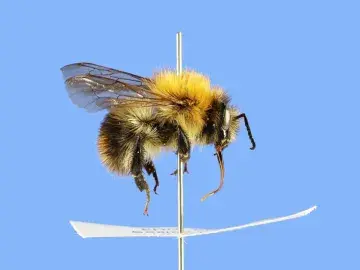
Learners try to use their key on the pictured bumblebee. Their keys will not correctly identify this species because it is found in North America, and the dataset learners used includes only UK bumblebees.
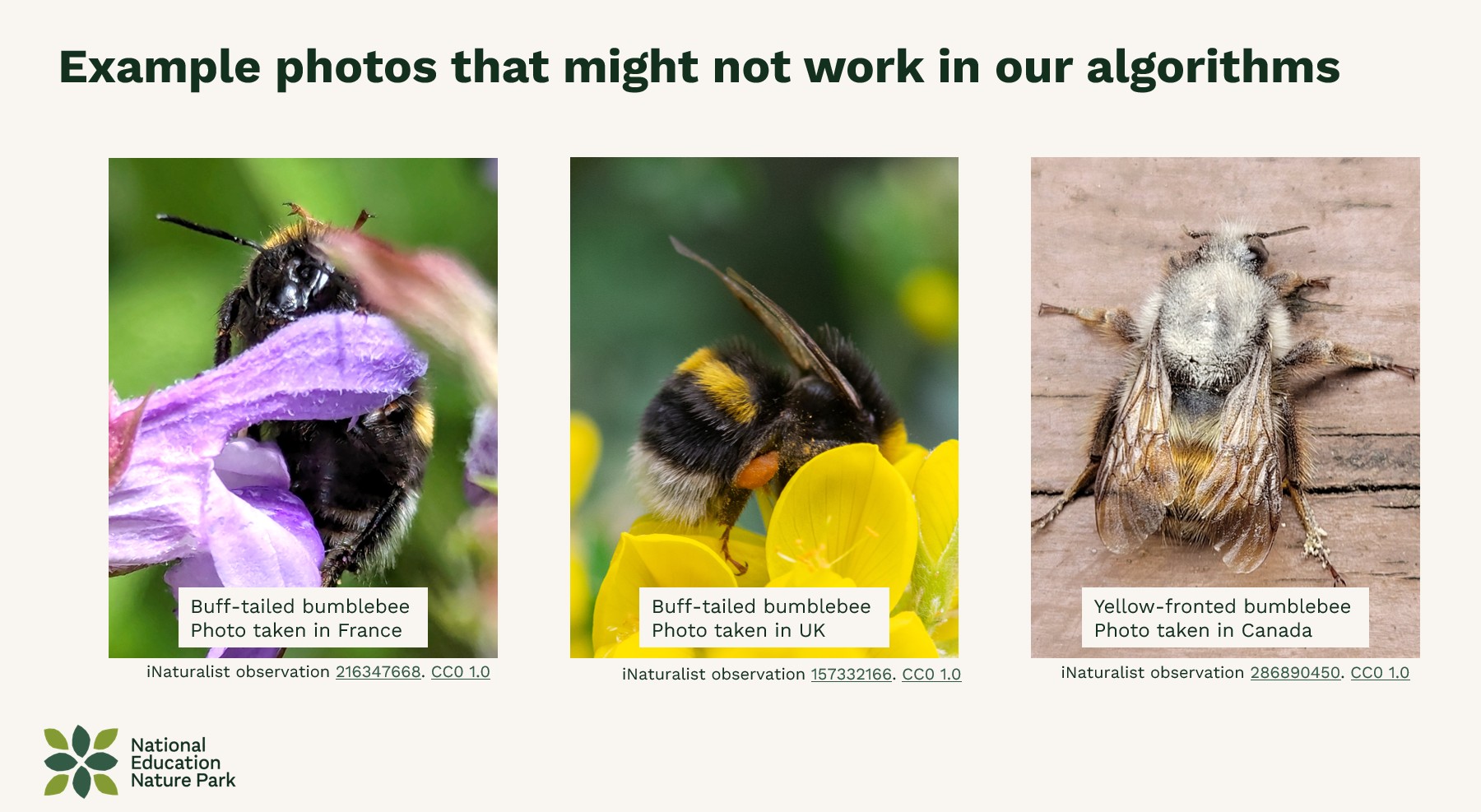
Slide 9 explores some of the limitations of using image recognition and explains some of the ways that the single photo does not include the necessary information to confirm an identification.
Breaking our algorithm (Slide 10-11)
- How many ways can we think of to make our algorithm give us the wrong answer?
- How can we fix our algorithm so these problems don’t happen?
- Learners can be shown slide 11 as prompts for thinking about these questions. Some possible responses are included in the presentation notes.
Learners can use the bumblebees from Set 7 of the bumblebee sorting cards resource for this activity. These bees demonstrate some of the additional complexity of classification by introducing sexual dimorphism and mimicry. See the notes included with the cards for more information.
See notes in the presentation for additional information.
Reflection (Slide 12-13)
- What might be some situations where AI image recognition might be misleading or not helpful?
- What might be some situations where AI image recognition would be a helpful tool to use?
Some potential responses are included in the presentation notes. Responses could include discussion about:
- limitations of visual information
- bias in training data
- speed of computer processing
- bias and subjectivity in humans
Curriculum links
- solve problems by decomposing them into smaller parts
- work with variables and various forms of input and output
- use logical reasoning to explain how some simple algorithms work and to detect and correct errors in algorithms and programs
Living things and their habitats
- describe how living things are classified into broad groups according to common observable characteristics and based on similarities and differences
- give reasons for classifying plants and animals based on specific characteristics
What to try next
What is a bumblebee?
Begin activity