Image recognition: Part 1 - Decomposition

An introduction to the concept of an algorithm and the computational thinking skill of decomposition. Learners use the process of developing a branching key for identifying bumblebees, to break down a complex task into simpler steps. Learners will also become more familiar with common bumblebees in the UK. 


Key learning points include understanding variables and decomposition in the context of computing, as well as understanding how to group living things according to specific characteristics. Skills and knowledge developed in this resource also support learners to contribute to the Nature Park Pollinator Count.
 

Lesson plans
KS2
Computing
Science

Preparation

What you need
  • downloaded presentation Part 1 -  Decomposition presentation
  • bumblebee sorting cards
  • pencil and paper or computer and spreadsheet
Location

Indoors

Scaffolding resources

Image
Diagram of an ant with parts labelled.

Parts of an insect

Begin activity
Image
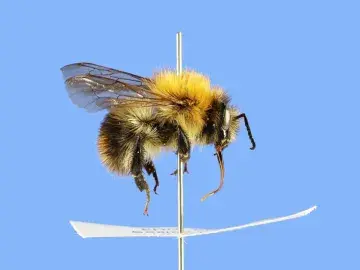
Bumblebee on a pin

What is a bumblebee?

Begin activity

Step by step

Learning outcomes (Slide 2) 
  • know that complex tasks can be broken down into smaller steps, and that this process is called decomposition.
  • know that an algorithm is a set of steps for solving a problem.
  • know that information in computers is stored in variables.
Key words (Slides 3-6)
  • Variable – a place for storing information.
  • Value – in computing, this is the information in a variable.
  • Algorithm – a set of instructions for solving a problem.
  • Decompose – to break down into smaller or simpler parts.
Simple algorithm for bumblebees (Slides 7-14)
  1. Review features that can be used to recognise bumblebees.
  2. Learners practise using those features to identify if the pictured insects are bumblebees.
  3. Learners use the features on a photo of a bumblebee, where not all the features are easily visible.
  4. Learners consider reasons why a computer might struggle to use the same features to recognise the animal in the image is a bumblebee.
Decomposing the problem of identifying bumblebees (Slides 15-24)

The bumblebee cards used for this section are photographed from the collections at the Natural History Museum. Insects are often preserved in museums by pinning them and letting them dry. Some of these specimens are more than 100 years old! Keeping a collection of insects like this gives us a historical record of bumblebees to help us see patterns and changes that take a long time to show up. 
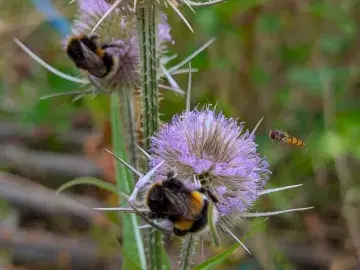
  1. Look at the bumblebee photos and identify differences between them.
  2. Decompose the problem of identifying bumblebees by using the fact that bumblebees have segmented bodies.
  3. Start with the three main body parts that all insects share (head, thorax, abdomen). Variables usually hold only one piece of information, but a single colour cannot describe these segments. The task needs to be further decomposed.
  4. Look at the image of how entomologists describe the segments of a bumblebee. Note that it is hard to see all these segments from photos because of their fur. Grouping segments together can help. (This slide includes simplified vocabulary. Feel free to replace this with the entomological terminology from the previous slide.)
  5. Different types of bumblebees have different colours on their segments. Use these segments as variables. The colour of each segment will be the value.
  6. Introduce bumblebee sorting cards and have learners fill in the table for the bumblebees in their set.
  • Use each set as-is for groups to produce their own key covering all 5 species.
  • Divide cards by species and have groups complete the table for that species. Then combine all the tables to produce a full key. You may want to use a shared spreadsheet for this.
  • Alternatively you could use the ladybirds sorting cards resource instead of the bumblebee cards.

Reflection (Slide 25) 

  • What are the pros and cons of decomposing a problem into many smaller steps?
  • If we allowed more than one colour in each of our bumblebee variables, what extra challenges might that cause?