

Climate action plans
Use the National Education Nature Park to help create your climate action plan


The Department for Education expects all education settings to create and implement a climate action plan. They are funding or supporting a national package of programmes that provide free high-quality resources and support to help education settings to do this — the National Education Nature Park, Sustainability Support for Education, Climate Ambassadors and Let's go Zero Climate Action Advisers. We all work together so that no matter which programme you engage with first, you’ll get the right support for your setting.
What is a climate action plan?
0:00
Teachers and educators are often searching for that one thing that makes everything a little easier. What if there was something that could improve attainment, attendance, attitude, save money, and make your school a happier and healthier place?
The answer lies in a climate action plan. It can support a range of priorities across school, nursery, or college. Around the country, education settings implementing these plans are driving action and seeing a multitude of benefits from improved behaviour and attendance, cost savings, and community cohesion, and better well-being.
So, what is it?
0:37
Climate action plans cover four key areas:
- Adaptation, making your setting more resilient to extreme weather and climate events.
- Biodiversity, improving your outdoor space to support the local environment, making it better for learning and wellbeing
- Climate education, ensuring all learners know the facts about climate change and are ready to pursue green careers.
- And finally, decarbonization, reducing the environmental impact of your setting through things like renewable energy, energy efficiency, and better waste management
1:08
But what support is available for you? There are four free programs that work alongside each other to support you in developing your plan. Let's dive into them.
The first is sustainability support for education, a website that helps you develop your climate action plan through key actions and curated resources.
Then we have climate ambassadors and let's go zero climate action advisor. These are trained DBS check staff and volunteers near you who can meet online or at your setting to offer support and expertise.
And finally, National Education Nature Park, a program that provides curriculum linked climate education resources and supports you and your learners to transform your outdoor spaces from gray areas into green nature havens.
1:52
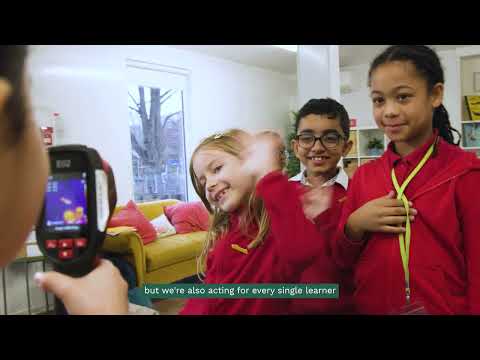
You can start your journey with any one of these programs. Work with one or all of them and use them alongside the work you're currently doing. So, yes, we're acting for the planet, but we're also acting for every single learner and member of staff. By creating a climate action plan, we're giving a vote of confidence for the future where [music] both nature and future generations can thrive. And don't forget, we're here to help.
Climate action plans are centered around four pillars to bring about a multitude of wellbeing, learning and environmental benefits for your learners and your community. Read on to find out how the Nature Park five-step cycle and free quality-assured activities and resources can support each pillar in your setting.


Adaptation and resilience
As you follow the Nature Park five-step cycle, consider your site’s current and future climate resilience using activities like Shade mapping and Habitat mapping. Start to think about what biodiversity improvements could act as nature-based solutions to climate impacts through activities such as Ideas for improvement and Find that plant!.

Biodiversity
Working your way through the Nature Park five-step cycle (aiming for one cycle each academic year) enables you and your learners to plan and take action to boost biodiversity on your site in an evidence-based way. From creating ponds to planting grasslands, check out our suggestions from scientists at the Natural History Museum and Royal Horticultural Society to see how you can transform your outdoor space from grey to green. As you submit data about your site through the programme, you’ll be able to track the difference you are making with others across the country and contribute to real scientific research into global nature recovery.

Climate education and green careers
The Nature Park programme puts nature and climate at the heart of education, across all subjects and key stages. Supports the delivery of cohesive biodiversity and climate education in your setting by embedding Nature Park curriculum-aligned resources, and develop green skills by engaging young people in the Nature Park five-step cycle. A great place to start is by reviewing your curriculum using the Nature Park Climate Curriculum Framework as a guide.

Decarbonisation
As part of your Nature Park journey, consider the role your site can play in decarbonisation. Green spaces on your site play an important role in capturing and storing carbon, reducing its impact on the climate. Think about how you can nurture any existing green spaces and how you could further improve your site with new additions. Check out our top tips on how to reduce carbon as you transform your site from grey to green with the Nature Park.
A whole setting approach
It's vital to get your whole setting involved and on board with your climate action plan to have the most impact. As you move through the Nature Park five-cycle, make use of resources that involve young people, teaching and non-teaching staff from across your setting in decision-making and care for your site, such as Nature Park assemblies, Three ways to prioritise opportunties and displaying a Nature Park plaque.
Communicate with and celebrate your setting’s Nature Park participation and achievements with the whole community by using resources such as Three ways to share your findings, Requesting environmental information with learners and ACTive Citizenship: a Nature Park guide.