
What to do with the Nature Park in autumn
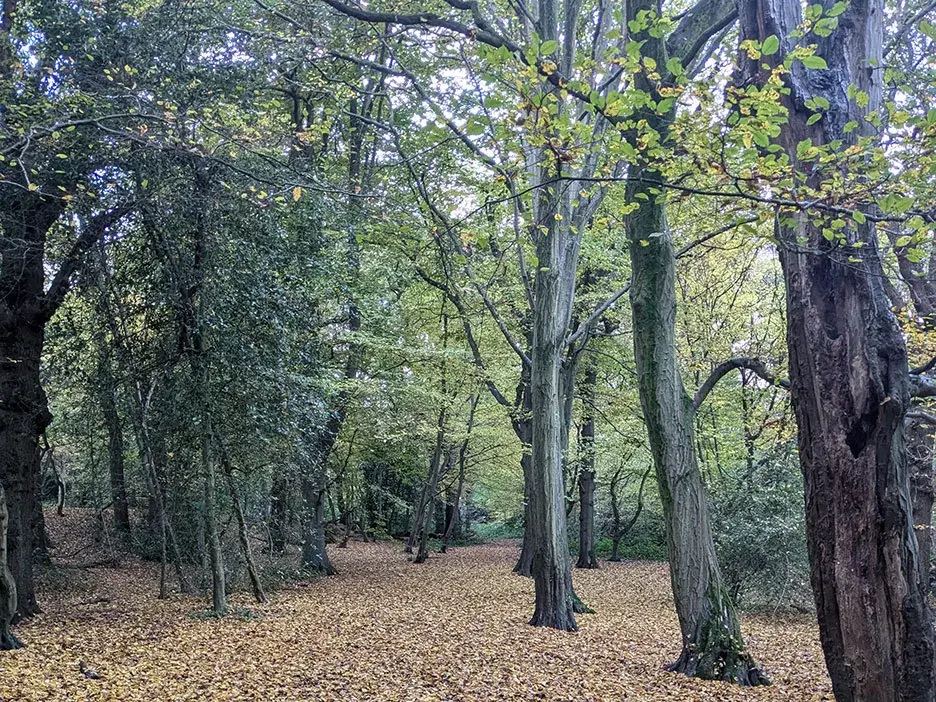
The clocks have gone back, leaves are turning orange and brown and there’s a slight chill in the air. Although it can be tempting to hibernate indoors, it’s a perfect time to take your learning outside – there’s plenty that you, your class and your outdoor space can benefit from.
Read on to discover the top things you can do in your Nature Park this autumn. All of our activities support curriculum knowledge and skill development across subject areas, and specific curriculum links can be found at the bottom of each activity page.
Map your habitats
Mapping your habitats is a really important part of the Nature Park process. It means you’ll be able to track the gains you achieve for nature as you progress through the Nature Park programme, and allows you to collaborate with the Natural History Museum on groundbreaking research into nature recovery!
Autumn is a particularly great time of year to map hedges and bushes, as the berries on the hedges make them easier to identify. It's also a good time to map out tree habitats, as you get to admire the beautiful autumn colours, and mapping water habitats because the extra rain at this time of year makes it easy to find the wet areas of your site.
Plan for the year ahead with the Nature Park year planner
Plan your year of activities and achieve each step of your Nature Park journey with our annual wall planner. We've selected key activities and focuses for each term to inspire you to get started, which you can tailor to fit your learners and your outdoor space.
Why not print out your planner and display it so you can plan your Nature Park journey together with learners? Use the space provided to add notes on what you decide to do in each half term!
Go to the planner
Get familiar with your outdoor space
The first step in the Nature Park process is all about getting to know your outdoor space. This includes what’s living and growing there, what’s not living and growing there, and how your school, nursery or college community feel about it and use it.
Some great activities to try are the Hidden Nature Challenge, where you can follow prompts to uncover hidden nature on your site and add it to an online map. You and your class can also get to know your space through the Points of view activity, which encourages you to think about how different wildlife may experience your site, or the Creative responses to a place activity which encourages learners to creatively explore the space around them.
Check out the resource library
Write a vision statement for your Nature Park
What does your school, college or nursery community want to accomplish through the Nature Park process? This activity encourages learners to imagine what they’d like the future of your outdoor space to be like. Check out some examples for inspiration, and then get started with yours!
Learn about green careers for Green Careers Week
It’s Green Careers Week takes place in November. The Nature Park programme develops six key green skills, from identification and ecology to creative thinking and decision making.
We've got a package of activities all themed around Green Careers Week. Why not check them out and inspire your learners with where they might like to take their future studies and careers?
Brush up on all things climate and nature with our educator factsheets
You'll hear lots of people talking about COP this time of year, which usually refers to the United Nations Framework Convention on Climate Change (UNFCCC) international meeting focusing on climate. Check out our educator factsheets on important climate and nature reports from the past few years to help decipher acronyms and support you and your learners with the key messages from these reviews.
Reports on climate change and biodiversity loss: a Nature Park guide