Grouping and classifying

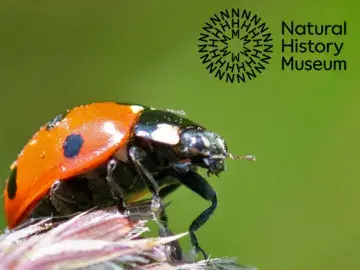
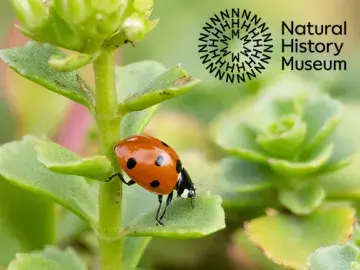
Practice grouping and classifying living things with ladybird cards featuring real specimens from the collections at the Natural History Museum. The ladybirds in this resource represent 10 of the more common species found in the UK. The 150 cards feature unique individual ladybirds, allowing learners to see the variation that can exist within a species, laying the foundation for understanding evolution.

Key learning points include that living things can be grouped by their features, and the importance of specific and appropriate language in science.


©Trustees of the Natural History Museum. Licensed under CC BY-NC-SA 4.0.

Originally produced with support from the Evolution Education Trust.

Lesson sequences
KS2
Science

Preparation

What you need
  • printed set of ladybird sorting cards
  • sticky notes
  • pens or pencils
Location

Indoors

Scaffolding resource

Image
Diagram of an ant with parts labelled.

Parts of an insect

Begin activity
Image
Ladybird below the Natural History Museum Logo.

All about ladybirds

Begin activity

Step by step

Part 1 - Grouping ladybirds
  1. Look at an image of a ladybird and ask learners to identify what type of animal it is. (Bird, mammal, reptile, insect etc.)
  2. Review what features insects share.
  3. Review or introduce vocabulary for parts of a beetle so learners will be able to refer to body parts using appropriate terminology.
  4. Explain that learners will be grouping these ladybirds by their similarities in their features. Ask learners to sort the ladybirds cards into groups and use a sticky note to label each group.
  5. Ask learners to split each group into smaller groups, giving each group a new label.
  6. Continue until each ladybird is on its own.
Part 2 - Making a branching key
  1. Divide the class into groups/pairs.
  2. Give each group a set of ladybird species cards, numbers xx-01 to xx-10.
  3. Spread out the ladybird cards and look at their features.
  4. Think of some questions that will give the answer ‘yes’ for some ladybirds, and ‘no’ for the rest. Write down your questions on pieces of paper.
  5. Pick a question to be at the top. Draw arrows to show where the 'yes' and 'no' ladybirds should go.
  6. Add another question at the end of each arrow to split the ladybirds into smaller groups until each ladybird species ends up in its own spot on the page.
  7. Swap your key with another group and see if it works for their ladybirds.
     
Part 3 - Branching key challenge
  1. Hand out cards for the variable ladybirds. (Card numbers xx - 11 to xx – 15)
  2. Students use their own key or use another group’s key to identify the ladybirds.
  3. Reveal which ladybird cards belong to which species.
  4. Students inspect cards and identify similarities in each variable species.
  5. Reveal the shared features.
  6. Students rework their keys to properly identify the variable species.
Plenary

Check learners' understanding using the concept cartoon.