Image
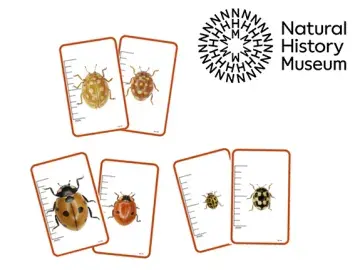
This resource supports learners in thinking about what makes a fair test as they design their own wildlife survey recording sheet. Learners then apply their classification skills as they collect and identify ladybirds. This resource also presents the results of a study aimed at understanding how the invasive Harlequin ladybird might be affecting other ladybird species. This can set the scene for why and how to conduct a wildlife survey, or it can be used to illustrate how results can be presented in different ways.
Key learning points are that surveys are types of scientific tests used to gather information; detailed notes are important for determining if a test was fair; and information can be presented in different ways for different purposes.
©Trustees of the Natural History Museum. Licensed under CC BY-NC-SA 4.0.
Originally produced with support from the Evolution Education Trust.
To make your survey sheet:
See Ladybird survey slides for information about invertebrate survey equipment.
Indoors and outdoors
The case study presentation can be used to set the scene for your own ladybird survey. Learners will be able to see how their work mirrors that of professional entomologists. You might also choose to save the case study or revisit it after your survey to look at how data can be presented in different ways depending on the research question.