Planting and growing food
Growing food is a fantastic way to connect to nature and help learners begin to understand where their food comes from. This can be adapted for most settings from planting in pots where space is limited, creating beds on concrete surfaces, to turning part of a field into a food growing area. Plants, which make up a large proportion of our diet, are crucial for our health and wellbeing. Both healthy eating and taking part in growing activities can improve mental and physical health and wellbeing, as well as improving your space for wildlife.
This continuous provision provides year-round learning opportunities. Ground is best prepared in winter, ready for seed sowing in spring, but lots of crops can be sown or planted into the summer for later harvests.
Preparation
What you need
- peat-free compost
- hand trowels or forks
- watering cans
- gardening gloves
- spades and rakes if digging in the ground
- fruit and vegetable seeds, or young plants
- a range of containers if growing in pots
Location
Indoors or outdoors
Useful guidance
Resources
Step by step
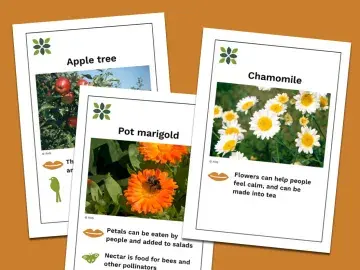
Prior to making changes to your space, help learners voice their opinions and make decisions on what they would like to do and see. Planning our green future encourages learners to share how they feel about different features in their space and what changes they might like to see. Imagining our space uses storytelling to discuss and visualise different improvements, while Plants and their jobs introduces the benefits of different plants for both people and nature.
For more in-depth guidance on growing flowers and food to improve your space, see Change grey to green: Buffets of flowers.
Growing in pots or containers
- Ensure pots have drainage holes to allow excess water to flow through.
- Fill pots with peat-free compost.
- Encourage learners to sow seeds in their pots, taking care to sow them at the suggested depth and spacing to give them enough space and the right conditions to grow.
- If planting young plants, learners can dig a hole in their pot to gently place the plant in – choose smaller crops that won’t outgrow your containers. Fill in the spaces around the hole with compost.
- After planting, learners can water their new containers. Containers need watering more regularly than plants in the ground.
Guidance on growing in pots from RHS:
- Crops in pots
- Vegetables in containers
- Easy herbs to grow in a school setting
- How to grow potatoes in containers
- Growing fruit in containers
Growing in the ground
- Explain that plants need carefully prepared soil to help them grow. Learners can use forks to break up the soil, creating an opportunity to explore what lies beneath the surface.
- The next step is removing weeds and any old plant material – a great activity for learners to explore plant parts.
- Rakes can be used to gently smooth the surface of the soil ready for planting.
- Encourage learners to sow seeds in the prepared ground, taking care to sow them at the suggested depth and spacing to give them enough space and the right conditions to grow.
- If planting young plants, learners can use spades to dig a hole to gently place the plant in – take your time with this part, it is a powerful learning experience. Fill in the spaces around the hole with compost or existing soil.
- After planting, learners can gently water in their new plants or seeds.
More guidance on food growing from RHS:
- Grow your own
- Growing vegetables in schools
- Edible flowers
- Food growing: Autumn term
- Food growing: Spring term
- Food growing: Summer term
Tips
- Create a watering schedule or assign ‘plant monitors’ to ensure the plants stay hydrated. Children can dip their finger in the soil to feel how moist the soil is and when plants need watering.
- Why not leave a pot or space open so that children can explore the soil throughout the seasons?
Curriculum links
Managing self
- be confident to try new activities and show independence, resilience and perseverance in the face of challenge
Building relationships
- work and play cooperatively and take turns with others
Self-regulation
- set and work towards simple goals, being able to wait for what they want and control their immediate impulses when appropriate
The natural world
- explore the natural world around them, making observations and drawing pictures of animals and plants
- understand some important processes and changes in the natural world around them, including the seasons and changing states of matter
What to try next
Plants and their jobs
Begin activity
How to make signs and labels
Begin activityCounting outdoors
Begin activityThumbnail image: © RHS, Credit: RHS / Joanna Kossak